
TU HWNT I’R MYNYDDOEDD
Plas Glyn y Weddw 2024
Pete Jones at Plas Glyn-y-Weddw - A commentary on 6 paintings by Gavin Keeney
Northwest Wales has what I can only call a somatic effect on my body and mind. It has partly to do with my repeated visits since 2013, but it also has something to do with a mythic dimension in “time-space” that defies categorization. This was confirmed when I visited an exhibition at Plas Glyn-y-Weddw in Llanbedrog on October 29. The exhibition, featuring paintings by five artists, was billed as “A joint exhibition of landscape and figurative art inspired by Welsh poets, industrial and cultural heritage.” Yet, the part that drew my immediate attention was the work of Pete Jones, assembled under the title “Tu Hwnt i’r Mynyddoedd / Beyond the Mountains.” And, amidst several dozen paintings by Jones (forty-one to be precise), the part within the part that truly drew my attention was a “set” of six paintings of dark and sombre, luminous landscapes featuring “Sea & Sky.” The larger corpus of works was spread across three galleries, whereas this set of six paintings shared the wall of one gallery as if they were inseparable. All of the other works on view by Jones departed from the six luminous, nearly monochromatic works that focused on something in the landscape of Northwest Wales that spoke to that somatic effect “being in Northwest Wales” had on my body and mind.
The six paintings (all oil on canvas) were: Soul of the Sea (122x91cm); Under the Mountain Lake (61x51cm); Soul of the Mountain (122x91cm); “Bird on the Winter Sea” (61x51cm); Carnedd (61x51cm); and Y swnt (67x54cm). The press release (flyer) for “Tu Hwnt i’r Mynyddoedd / Beyond the Mountains” included a sequence of provocative statements regarding influences intended to set the work in that mythic reserve I suspected being responsible for my somatic reaction to Northwest Wales. The various statements included:
“The Mountains and Sea around Northwestern Wales”
“Loss of family and friends”
“Solar and lunar cycles also feature heavily”
“Themes that reflect the constant passage of time”
‘Visual ambience’ of a place rather than a detailed, pictorial representation of what is before me”
“Words of artists and writers that have resonated with me in terms of my own view of life and of Wales”
“Words can inspire imagery just as imagery can inspire words”
“Working “quickly and instinctively, influenced by chance”
Also playing in the main two galleries was what could only be called “ambient music,” composed by Jones. It, too, was entitled “Tu Hwnt i’r Mynyddoedd” (2024). Low enough in volume to be unobtrusive, it nonetheless added to the spell cast by that set of six paintings.
After several trips around the three galleries, to process what was on display, and following stepping outside to smoke once or twice, while gazing across rooftops toward Llanbedrog beach, Cardigan Bay, and the Irish Sea, I then sat “watching” the set of six paintings, the somber and luminous set, expecting them to start moving – the waves to roll, the skies to part, to reveal their secrets. They shared not only somber luminosity but also a depth. The depths extended in some “into the sea” and in others “into the sky” … In some “into both” (sea + sky). In others, “Sea + Sky” were one thing – a totality – horizon present or horizon absent. In the set of six, landscape itself (mountains, shoreline, lake, sea, sky, sun/moon, treeline) receded as luminous horizon or luminous clouds leapt forth. In one of the set of six (Soul of the Mountain), at “stage left” (top left corner), a moon or sun rose/set/fell, appearing to draw with it a torrent of atmospheric chaos (clouds, mist, winged hallucinatory serpents or …). It all “fell” (was falling) into place/not-place, earth and sky “One” ancient urn of infernal and celestial fires.
One outtake so to speak from the set of six was an exceptionally intense and smallish canvas entitled “Blood and the Wild Sky” (oil on canvas, 76x50cm). It was in reference to a passage in “Welsh Landscape,” a poem by R.S. Thomas. The passage referenced was:
“To live in Wales is to be conscious
At dusk of the spilled blood
That went into the making of the wild sky …”
The “bloody canvas” (image of turbulent sea/sky, distant/setting sun/moon in a patch of golden-yellow amidst blood-red sea/sky) overflowed the canvas, spilling on to the white wooden frame, with a few bloody fingerprints for good measure. (It would have been additionally provocative if Jones had left some bloody fingerprints on the gallery wall, the artwork then truly entering into dialogue with the room …) Traces of human figures behind the sea/skyscape were barely discernible or “not there” at all – hallucinations inferred or hallucinations incurred.
Jones somehow managed to tap into that “somatic” effect (affective and/or mythic reserve) of the Welsh landscape I felt upon arrival, upon all arrivals in Northwest Wales since my first arrival in 2013; an affective register in landscape that spoke to me of various things.
Gavin Keeney is a New York based author, editor and critic. He is also Director of "Edition One", a literary agency for artists and scholars. This piece is from his "Substack" page published 30/10/24.
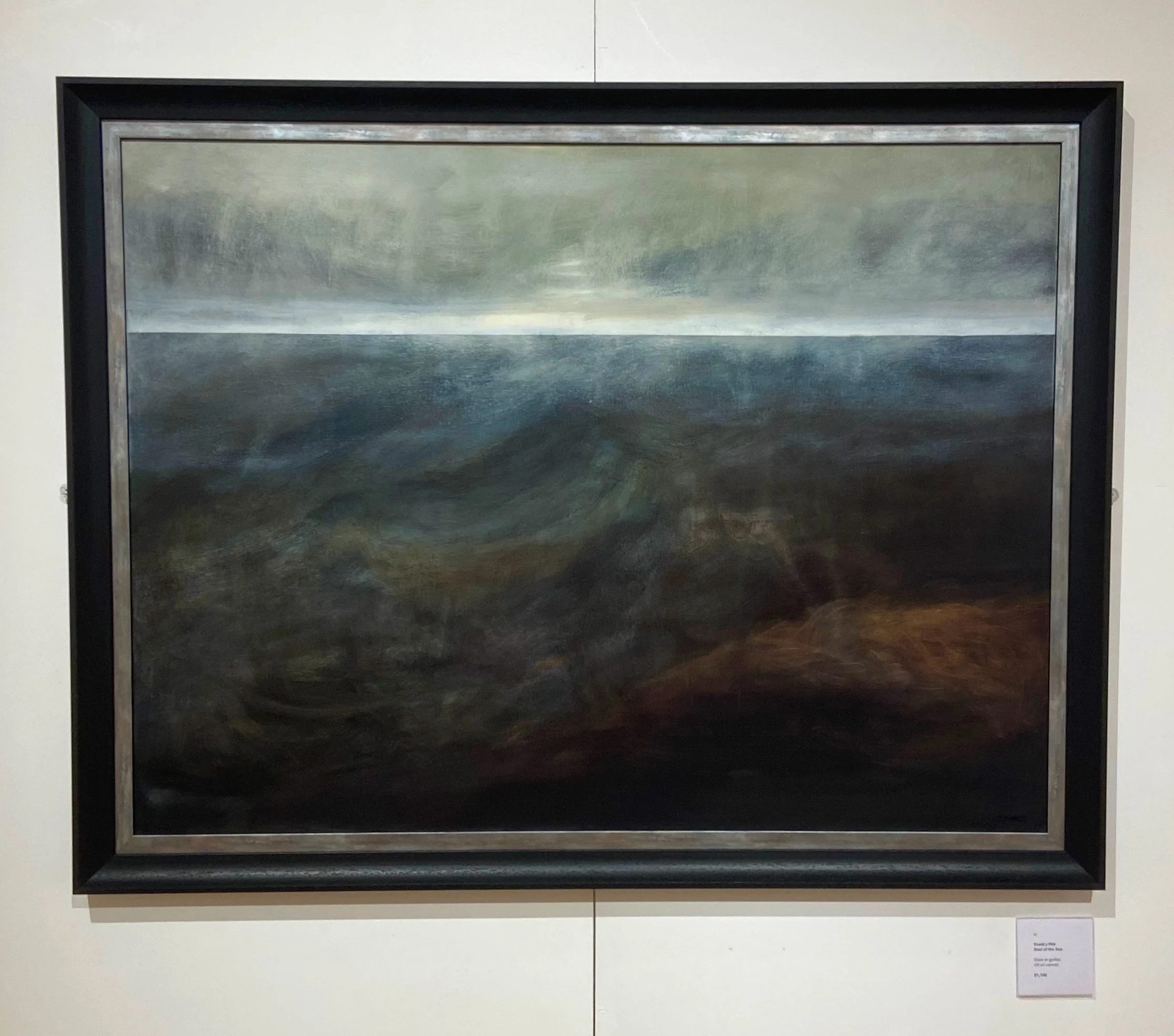
“Enaid y Môr” (Soul of the Sea)
Oil on canvas
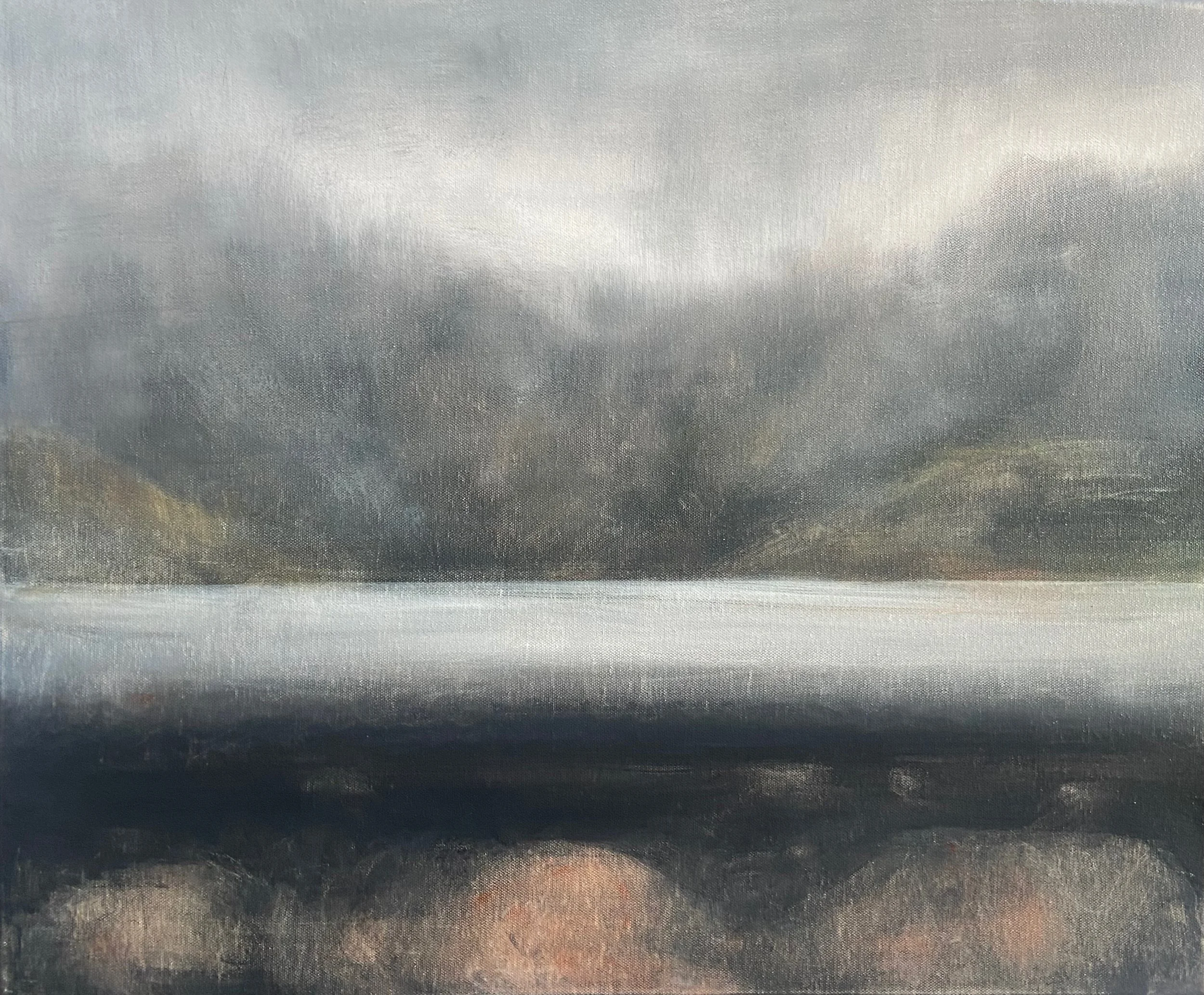
“O dan Llyn y Mynydd” (Under the Mountain Lake)
Oil on canvas
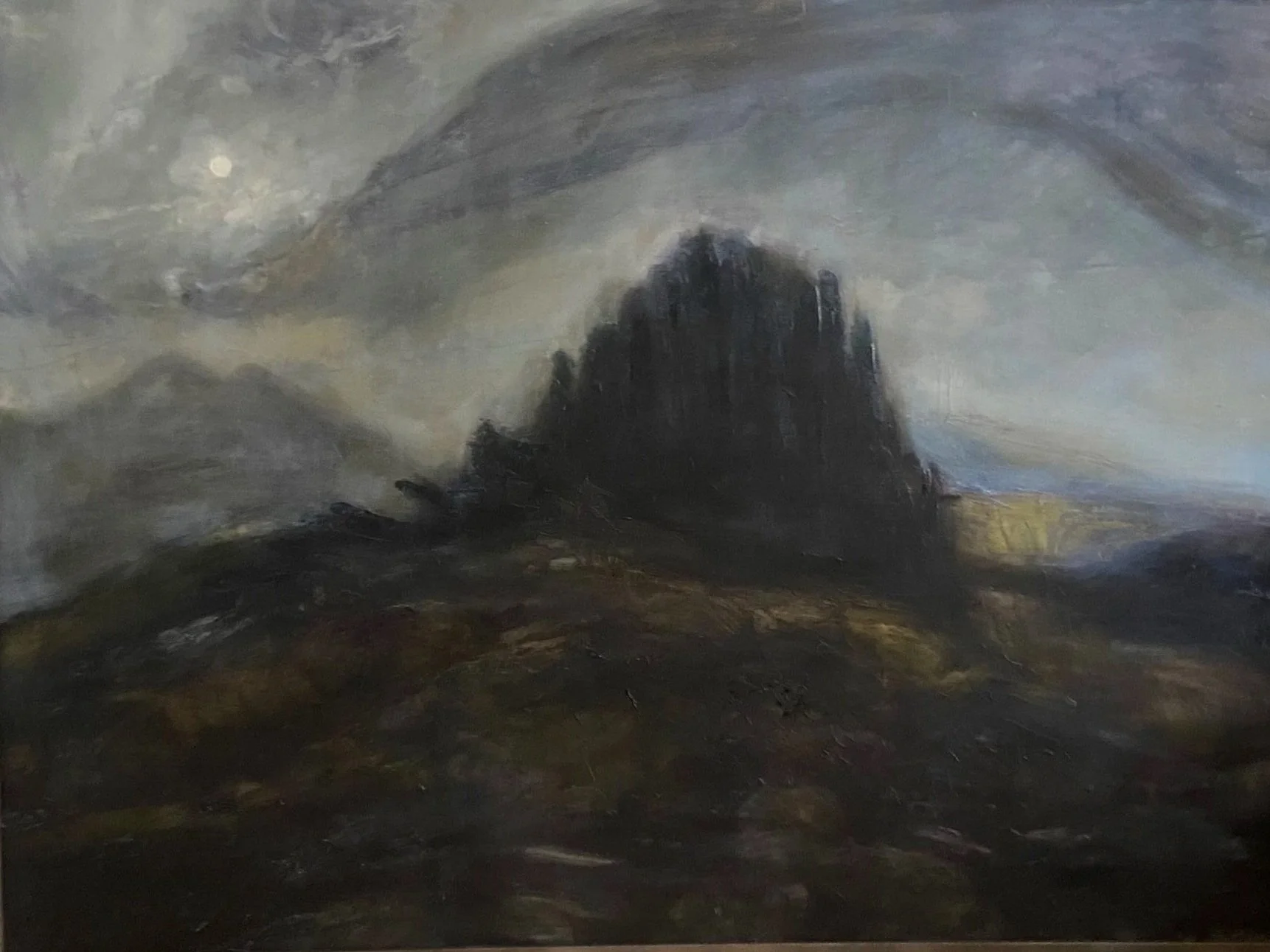
“Enaid y Mynydd” (Soul of the Mountain)
Oil on canvas
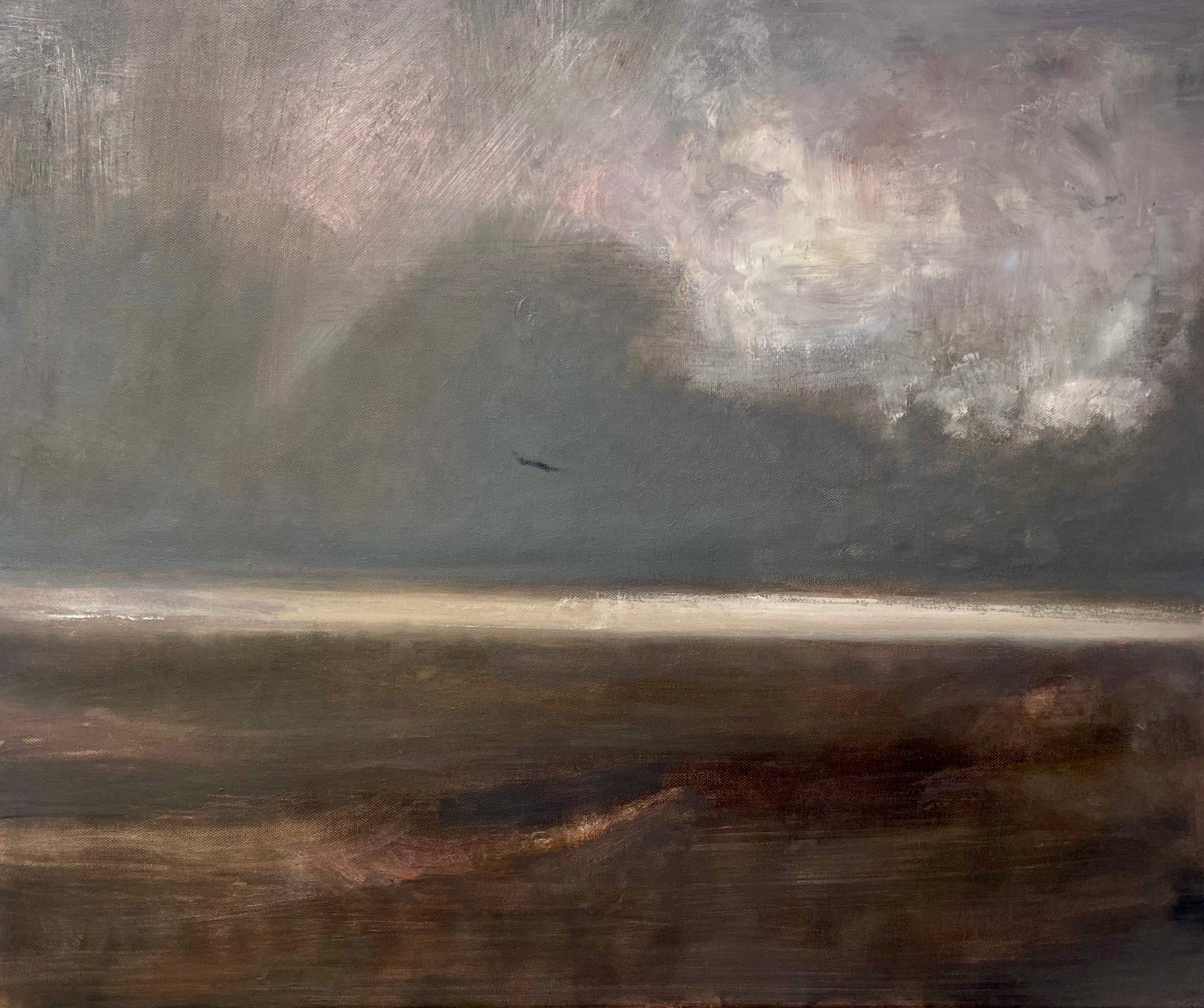
“Bird on the Winter Sea”
Oil on canvas
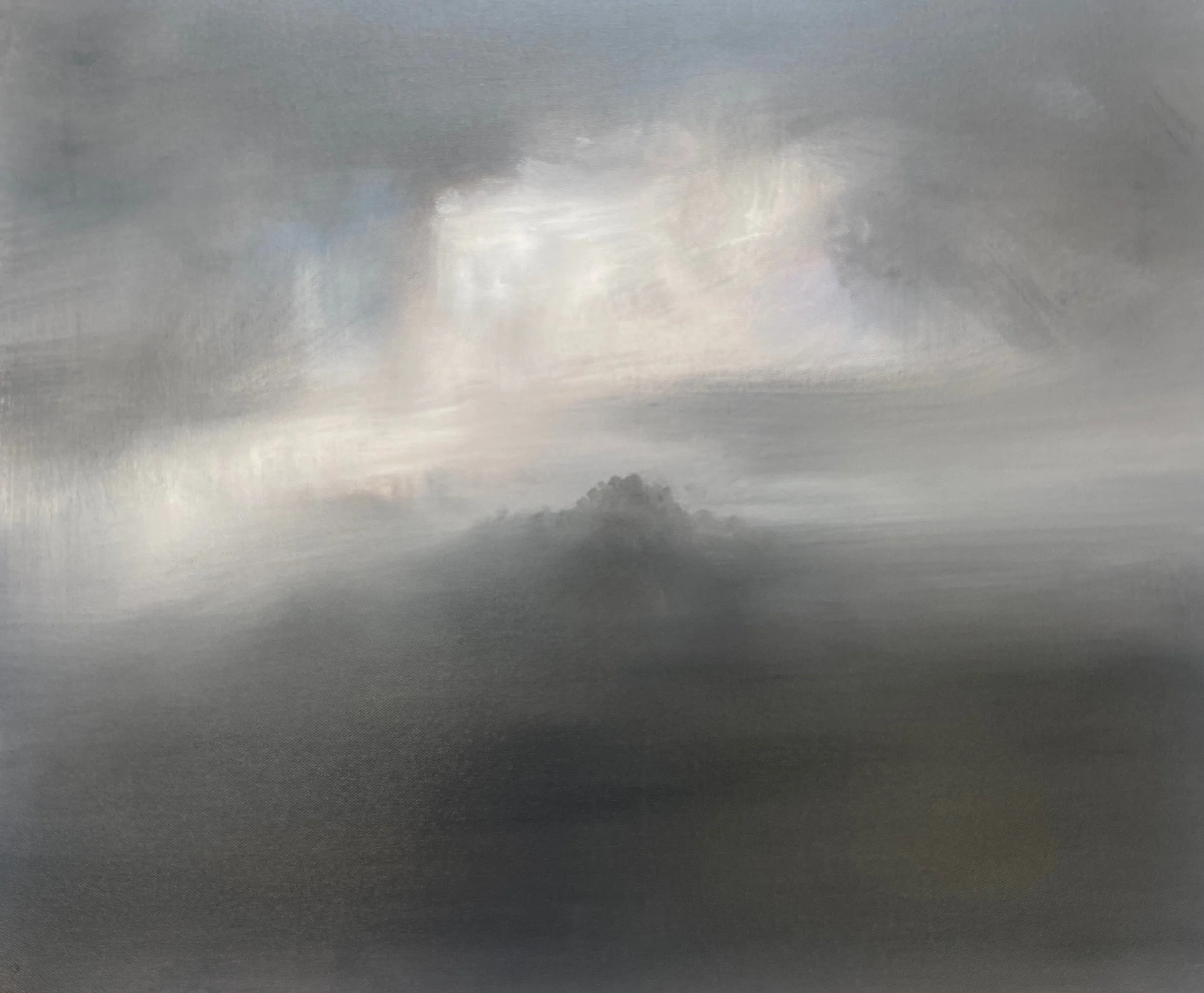
“Carnedd”
Oil on canvas
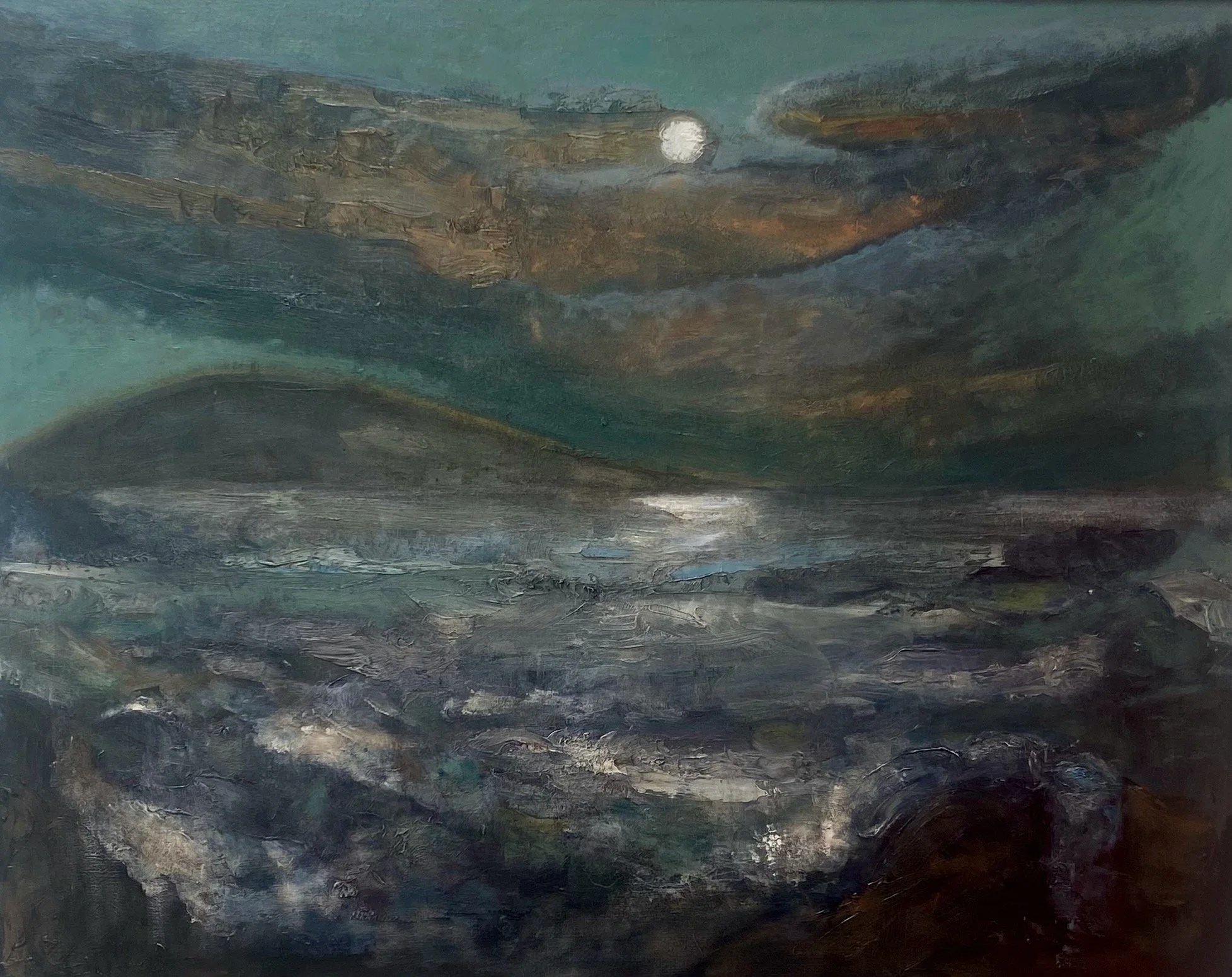
“Y Swnt”
Oil on canvas
Much of my time is spent up in the mountains or on the coast. When I am in these places, especially in more recent years, I have probably become more reflective in terms of my own awareness of our fragile mortality. These feelings become more acute when faced with the weathered grandeur of the land and seascapes of the Western Coast of Northern Wales, the context in which the work is set. Feelings are also compounded following the loss of family or friends. The solar and lunar cycles also feature heavily, themes that reflects the constant passage of time.
Painting can be a selfish endeavour, sometimes focusing upon inward responses to life, the exploration of ideas and the resolution of thoughts and personal feelings. For me it is an organic process that is greatly influenced by my own feelings in response to what I see and feel.
My paintings attempt to create a feel or “visual ambience” of a place rather than a detailed, pictorial representation of what is before me. My starting points for some of the works were the words of artists and writers that have resonated with me in terms of my own view of life and of Wales, these include Brenda Chamberlain, Patrick Jones and R.S. Thomas - Words can inspire imagery just as imagery can inspire words.
I have tried to work quickly and instinctively, Influenced by chance. Many of the paintings have thick layers of paint that have been re-worked several times and some retain the feint imagery of what lay beneath the final image. I have found this process interesting and I hope it has given an additional depth to the final work.
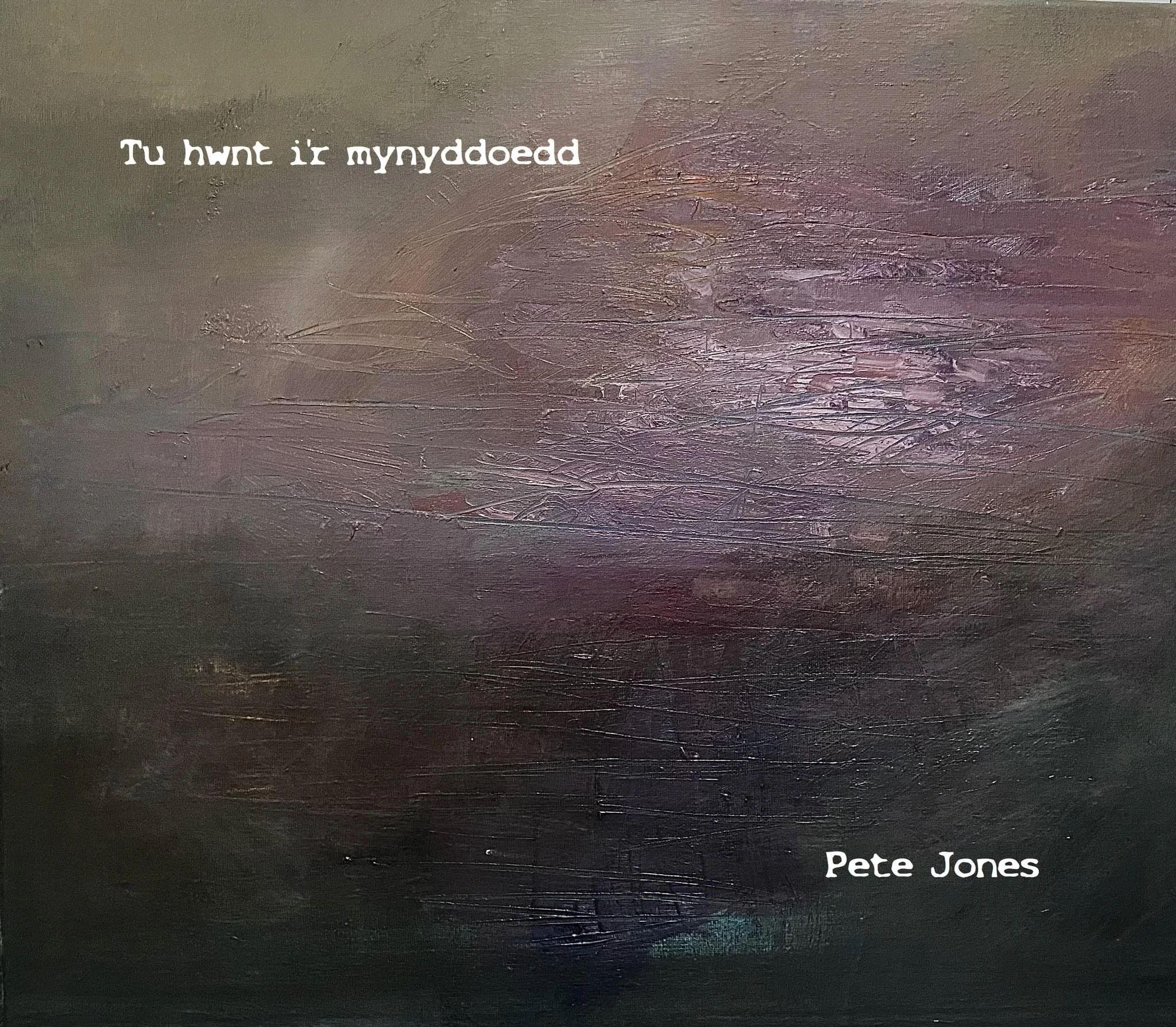
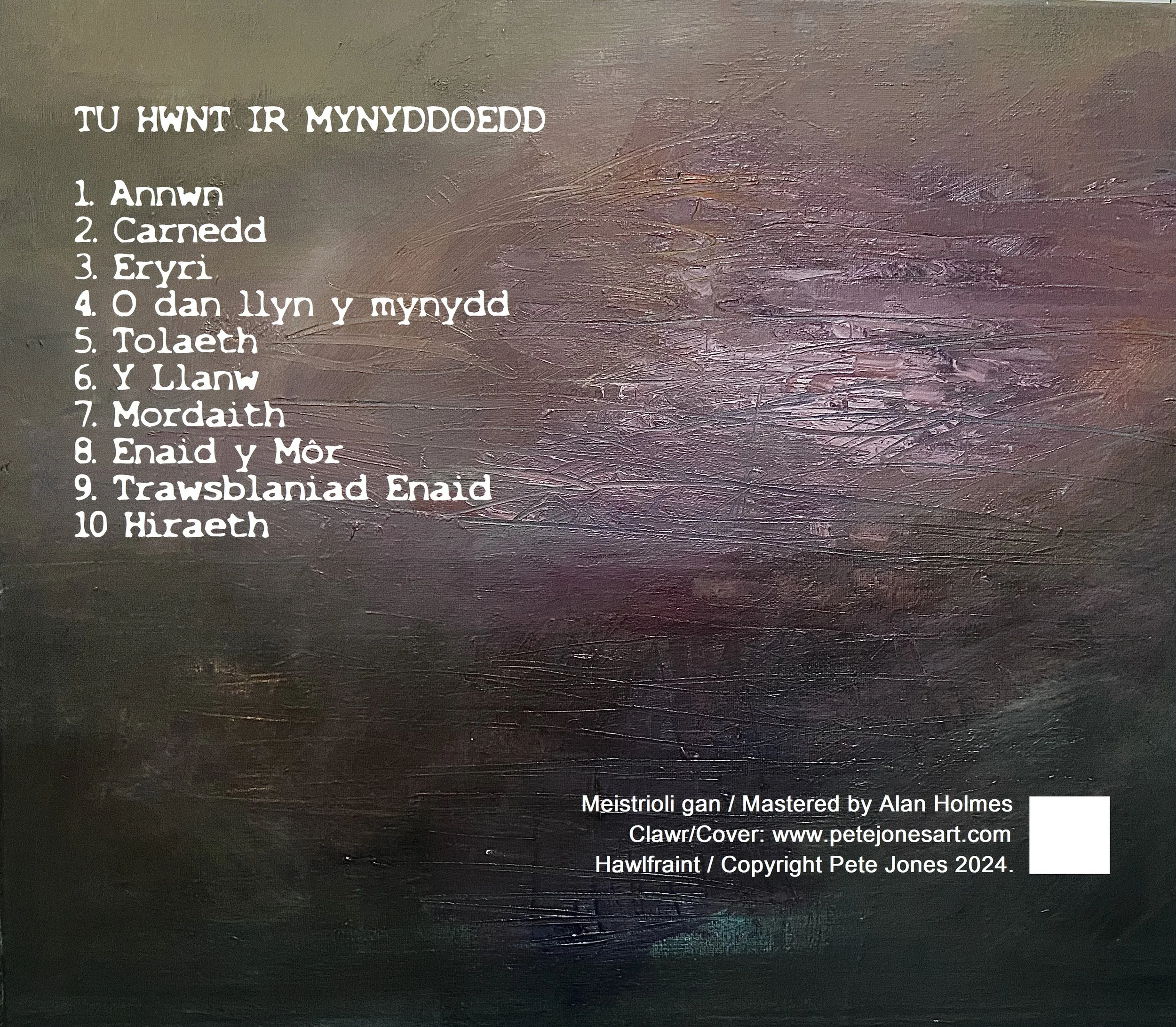
TU HWNT I’R MYNYDDOEDD (Beyond the Mountains) - AMBIENT MUSIC
I like to experiment with different media. In preparation for the Plas Glyn-y-Weddw exhibition I set about interpreting 10 of my paintings through sound. The result was 10 ambient / electronic tracks. These tracks are available through download via my Bandcamp site. There are also limited CDs available at £12 each (Including P&P) . Please contact me directly for further information.